


BOON and the TSB Showplace - fifty years of keeping New Plymouth’s cultural heart beating.
The Building That Belongs To The City
Some buildings become part of a city’s identity without anyone deciding they should. The TSB Showplace is one of them.
For a century, it’s been where New Plymouth dresses up, files in, and lets itself be moved – by the drama, the music, the shared experience of sitting in a darkened room and feeling something. First as the Opera House, opened in November 1925. Then as the Showplace, reimagined and renamed after a landmark redevelopment in the late 1990s. Through each chapter, the building has outlasted trends, survived the shift to screens, and remained the place Taranaki comes together for the kind of night you actually remember.
BOON first worked on it in 1976 – one of the practice’s earliest commissions. A renovation of the seats and foyer, modest in scale but significant in what it started. What followed wasn’t a series of one-off projects. It was a relationship. One that has shaped the building most people in Taranaki know better than they probably realise.
A Partnership Built Over Decades
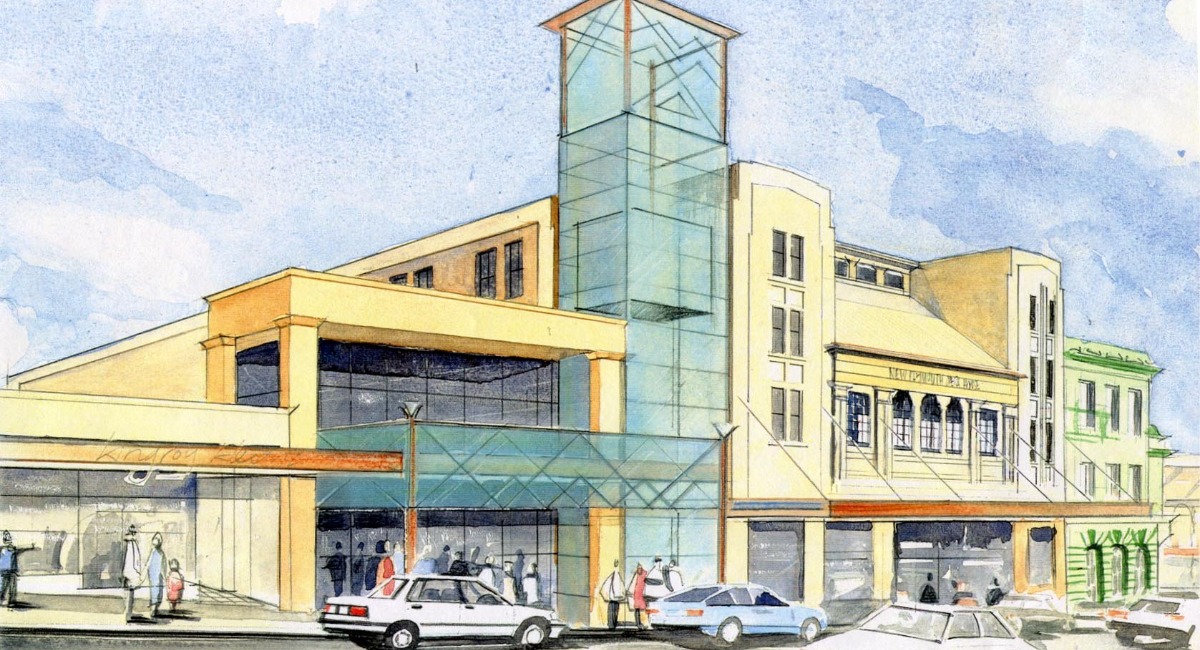
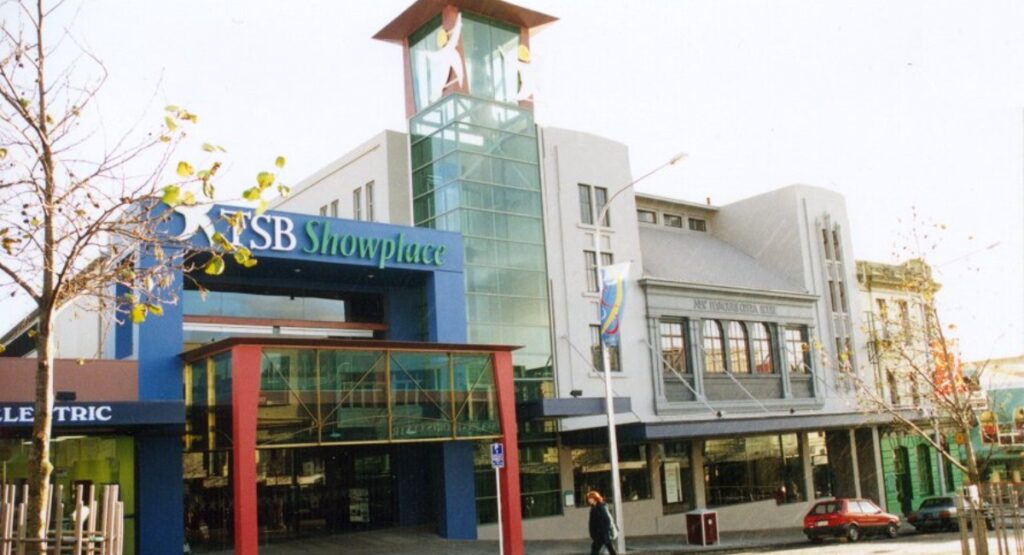
BOON has been the design partner for the Showplace through its most consequential moments – including the 1997–99 redevelopment that transformed the Opera House into the Showplace as it exists today, adding the Theatre Royal and expanding the venue’s capacity and ambition in equal measure. It’s the kind of long-term relationship that produces a particular kind of understanding: not just of a building’s bones, but of how it actually lives – how it’s used, where it strains, what it needs next.
That understanding became the foundation for what came next.
The Foyer: The Final Chapter
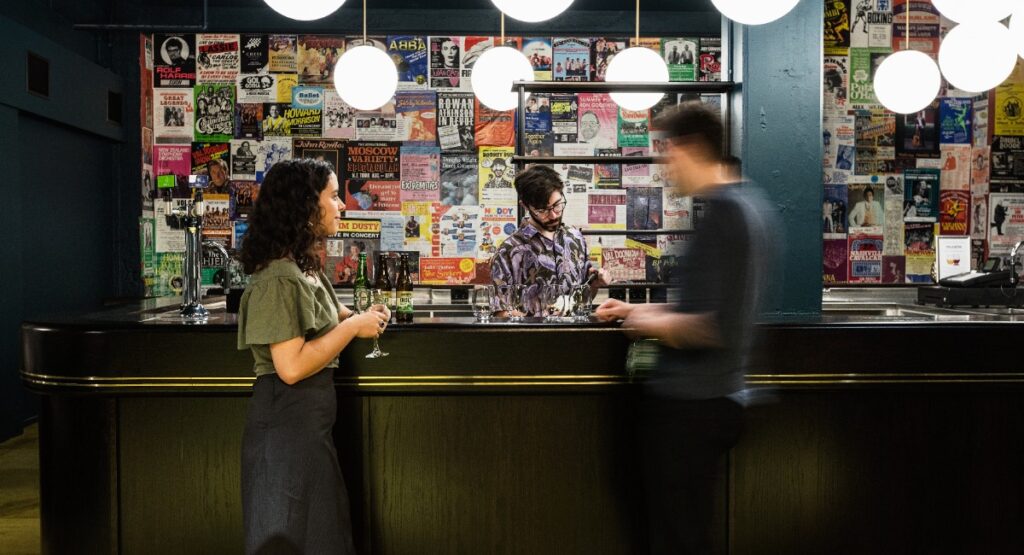
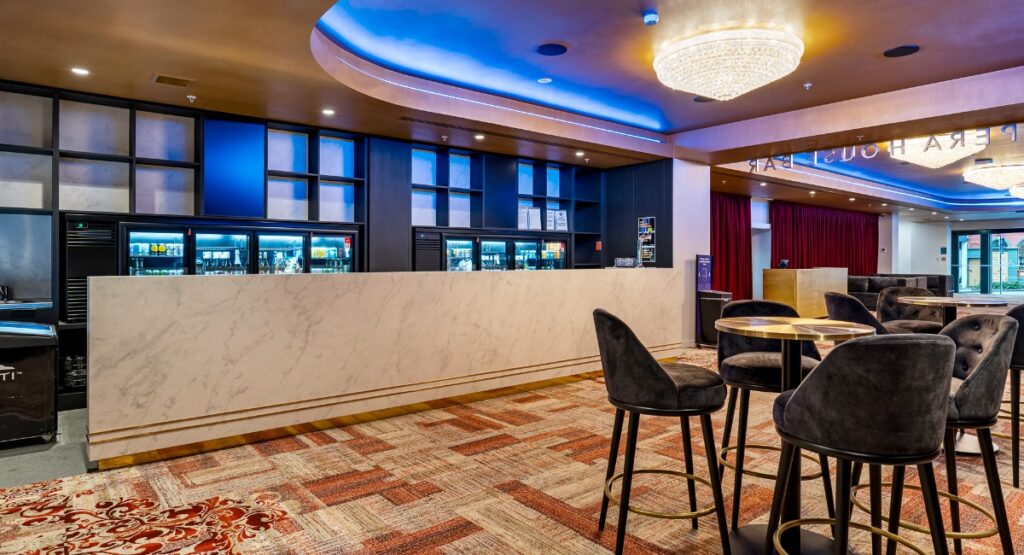
The 2025/26 foyer upgrade was never going to be a simple refresh. Concealed behind the public-facing transformation includes a seismic upgrade – the kind of unglamorous but essential work that makes everything else possible. From there, nearly every element of the foyer was reconsidered.
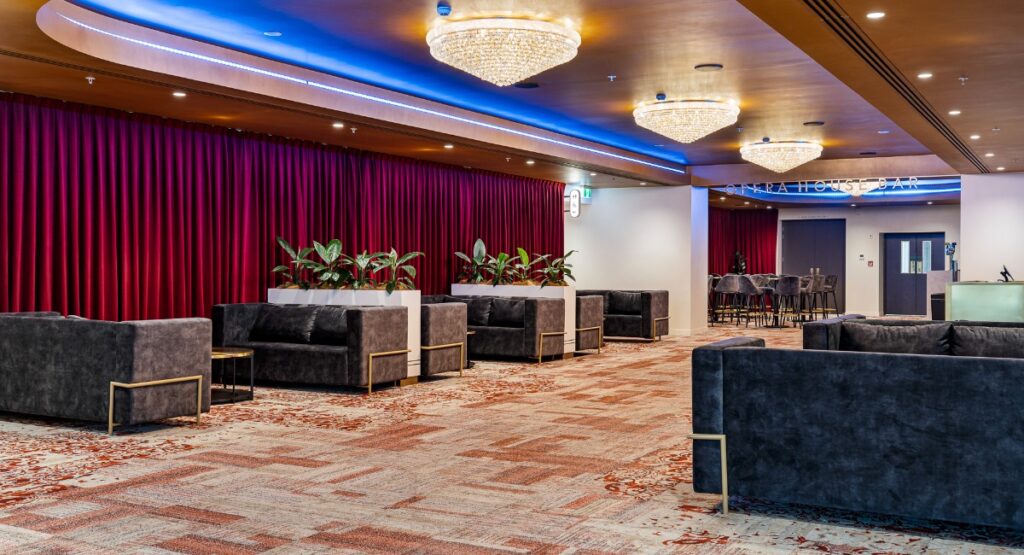
The aesthetic followed the function – and matched it in ambition. The gold, red, and white palette of the main Theatre Royal – introduced in 2012 – has been integrated into the foyer, creating a visual continuity between the public and performance spaces. The feature ceiling was raised to give the room a greater sense of grandeur, with a new chandeliers as its centrepiece. Plush red curtains line each side of the space, softening acoustics while anchoring the aesthetic. New LED displays – interior and exterior – bring the building’s signage and promotional capability fully into the present.
The result is a foyer that feels like it belongs to the same building as the theatre behind it.

‘The One Hundred’: A Century Worth Celebrating
The timing of the foyer’s reopening was deliberate. The TSB Showplace turned 100 in late 2025, and the centenary gave the project a dimension that went beyond scope of works.
That dimension found its fullest expression in ‘The One Hundred’ – a production conceived specifically for the anniversary – aligned with the reopening of the theatre in July 2026. Ninety performers. Thirty songs. Twenty-five productions woven together into a single evening that traced the history of musical theatre at the Showplace from its earliest years to the present.
It was exactly the kind of event a building like this deserves. And exactly the kind of occasion BOON has spent fifty years helping it be ready for.
“The foyer was always the final piece – the most visible, and the most loaded with expectation. Getting it right meant understanding not just the brief, but the history sitting behind it.”